Digital Marketing Funnel: A Complete Guide for Marketers
Turn clicks into customers: Unlock the secrets of the digital marketing funnel to guide your audience from first impression to loyal advocacy!
The digital marketing funnel is a powerful model that can assist in leading potential customers on the path from knowing about your brand to being loyal and repeat customers.
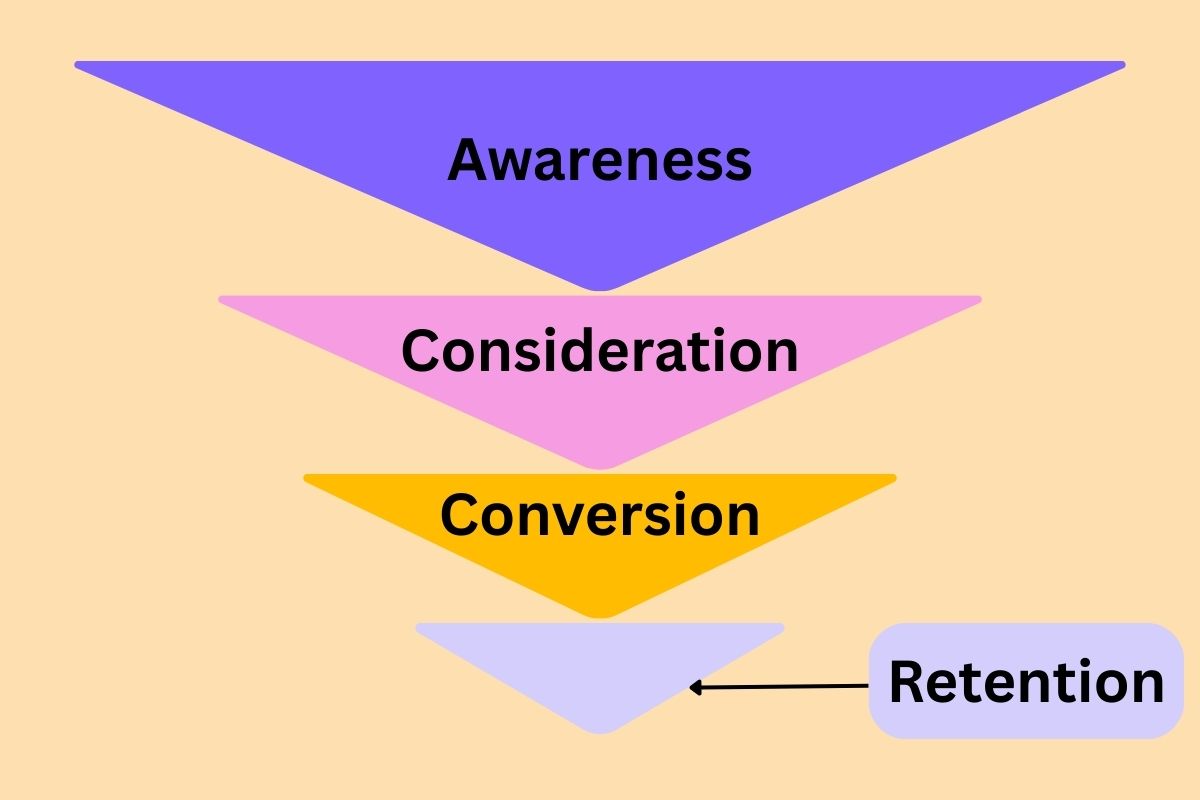
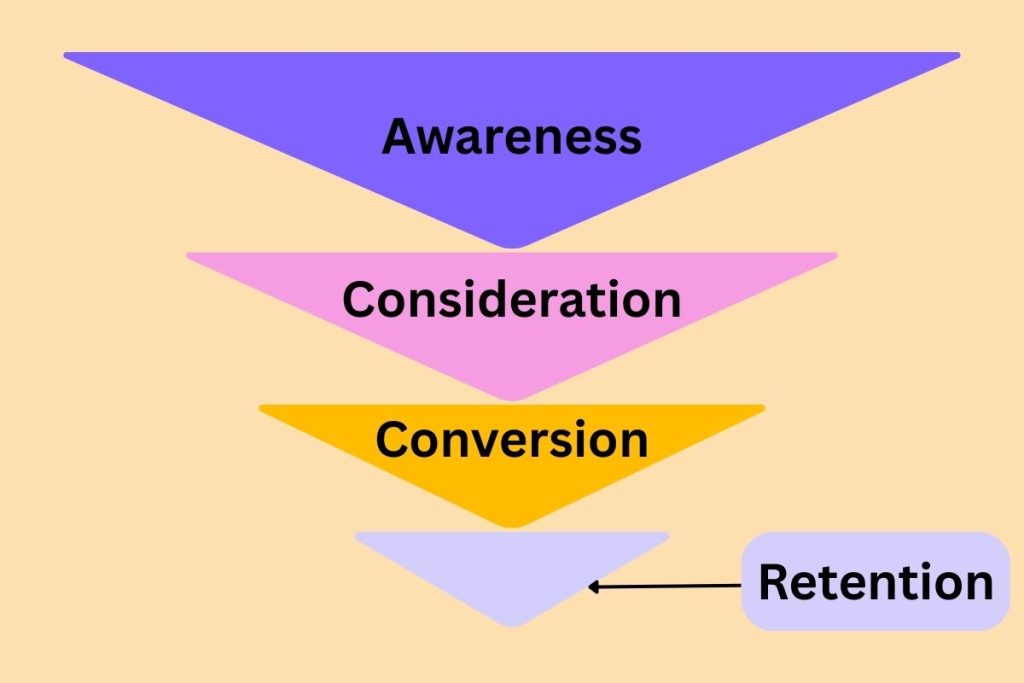
Being aware of all stages of the funnel awareness, consideration, conversion, and retention, marketers will be capable of creating certain strategies that will be attractive to the target audience, building leads, and increasing the conversion rate.
Companies can build trust, improve engagement, and build long-term relationships with customers using content marketing, social media, lead magnets, and influencer collaboration, and gauge success through the monitoring of key metrics.
This manual breaks down each stage of the digital marketing funnel and provides useful advice to accomplish the most favorable results.
Table of Contents
What Is a Digital Marketing Funnel?
A digital marketing funnel is an organized process that takes potential customers through the stages of brand awareness to the point of becoming a paying customer with the help of strategic digital marketing activities.
It traces the customer journey through the key stages of the marketing funnel, including the awareness stage, the consideration stage, and the conversion stage, through the use of channels such as social media, search engine optimized content, and paid search, and to build trust, increasing the conversion rates, enhancing customer relationships, and supporting long-term customer retention beyond the conventional marketing funnel.
Digital Marketing Funnel vs Traditional Marketing Funnel
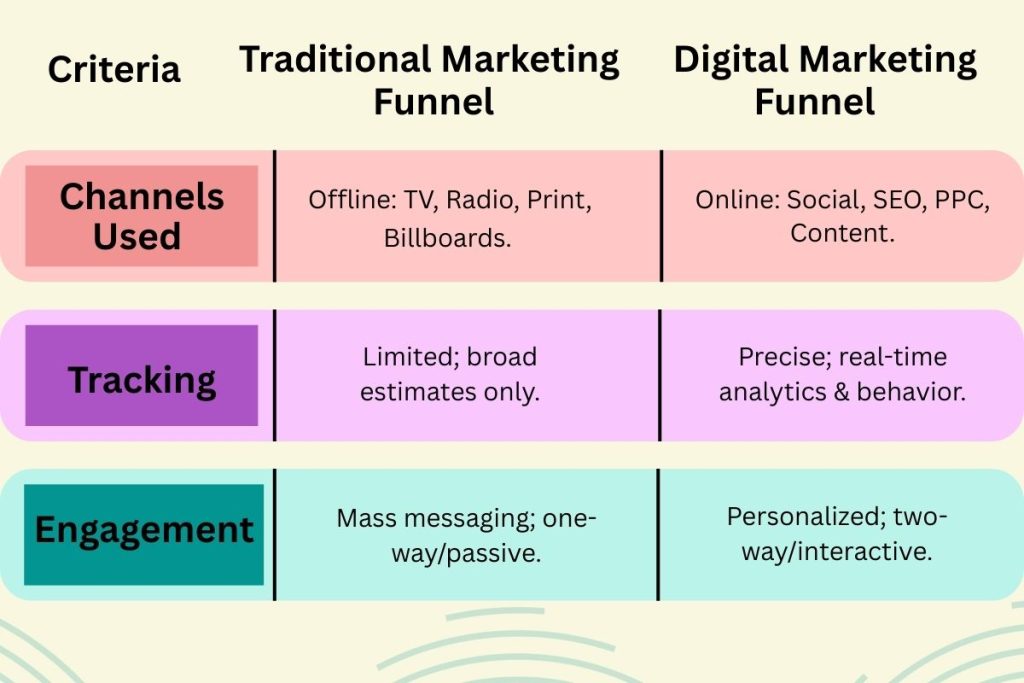
The significant distinction between the digital marketing funnel and the traditional marketing funnel is how they attract, engage, and convert potential customers during the customer journey.
Despite the fact that both are oriented to the funnel stages of the prospects to transform into a paying customer, the digital marketing funnel uses the techniques of data-driven marketing and online platforms to increase the conversion rates and customer retention.
The traditional funnel, on the contrary, relies on offline marketing efforts and minimal tracking and customization.
Channels Used
Digital marketing funnel involves online platforms like social media, search engine, paid search, content marketing, and influencer marketing to target a specific audience, where the traditional marketing funnel relies on offline platforms, including TV, print advertisement, radio, and billboards.
Customer Journey Tracking
The digital marketing funnel enables the marketer to monitor the traffic of the website, funnel steps, and customer behavior through the use of analytics and other key metrics to monitor the funnel, whereas the traditional funnel provides the marketer with a very limited understanding of customer movement.
Personalization and Engagement
Digital funnels facilitate customized messages, lead magnets, push notifications, and custom calls to action depending on the customer pain points, whereas traditional funnels use mass messaging with little interaction.
Measurement and Optimization
Digital marketing funnel allows A/B testing, optimization of the conversion stage, and real-time optimization, whereas traditional marketing funnels are more difficult to measure and optimize correctly.
Customer Retention Focus
The digital marketing funnel focuses on retaining customers, making repeat purchases, customer testimonials, and establishing long-term relationships with loyal customers, unlike the traditional funnel, which tends to stop once the conversion has been made.
Digital Marketing Funnel Stages Explained
The stages of the digital marketing funnel describe the way in which potential customers pass through the customer journey, step by step, as they learn about a brand and become a loyal customer.
The stages of the digital marketing funnel are dedicated to a particular marketing initiative that aims to resolve the pain points of customers and steer the decision-making process.
Knowing these funnel stages can assist the marketer to develop trust, increase conversion rates, and develop a complete-funnel marketing approach that can sustain customer relationships in the long term.
- Awareness Stage(Top of Funnel - ToFu)
- Consideration Stage(Middle of Funnel - MoFu)
- Conversion Stage(Bottom of Funnel - BoFu)
- Retention Stage(Post-Purchase)
Awareness Stage: Creation of Brand Awareness and a Targeted Audience
The first stage of the digital marketing funnel is the awareness stage, where you aim to make your brand known to potential customers and to attract their attention.
Social media, posts on blogs, paid search, influencer marketing, and search engine optimized content are some of the tools that marketers use to reach a specific audience and motivate traffic to their websites.
This phase is aimed at solving the pain points of the customers, building brand awareness, and building trust early in the customer journey.
Lead generation and easy passage through the funnel stages are based on effective awareness campaigns.
Consideration Stage: Generating Leads and Developing Prospective Customers
The consideration stage is when the potential customers actively consider your products or services and make a choice after comparing options.
Marketers concentrate on lead generation by using content marketing, landing pages, live demos, and lead magnets, and on nurturing potential customers by using email marketing, personalized messages, and customer testimonials.
The purpose of this step is to develop trust, solve pain points, and move the prospects to the conversion stage.
Brands can make the leads go further along the digital marketing funnel by delivering useful information and by engaging with them in a specific manner.
Conversion Stage: Improving Conversion and Customer Acquisition
The conversion stage is the stage where the leads take action and become paying customers, and this is the most critical stage of the digital marketing funnel.
Marketers maximize landing pages, offer clear calls to action, perform A/B testing, and offer tempting value propositions to maximize conversion rates and customer acquisition.
This will be done to ensure that the process of purchasing is as painless as possible, collect contact information, and turn interested prospects into loyal customers.
The strategic approaches in this case would ensure that the marketing activities are translated into measurable business results and long-term relationships.
Retention Stage: Building Trust, Repeat Buyers, and Loyalty.
The retention stage is targeted at retaining the customers after they have purchased and transforming them into loyal and repeat customers.
Some of the tools that marketers apply to build trust and secure good customer relationships include personalized content, push notifications, loyalty programs, email campaigns, and customer testimonials.
This stage is centered on long-term relationships that will encourage repeat purchases and advocacy and reduce churn.
By retaining customers, the brands can maximize lifetime value and improve the overall digital marketing funnel.
Full-Funnel Marketing Strategy and Optimization Tips
A full-funnel marketing approach will make sure that all the steps of the digital marketing funnel, such as awareness, retention, etc., are streamlined to take potential customers through the customer journey with ease.
Through the combination of various channels, monitoring important metrics, and customization of marketing activities, the brands will be able to increase the conversion rates, develop trust, and establish long-term relationships.
Ongoing optimization and analysis enable the marketer to optimize every stage of the funnel to its best.
Integrated Channel Approach
Full-funnel marketing is a marketing strategy that uses multiple online channels to reach prospective customers at different stages.
Brand awareness is generated with the help of social media, paid search, and SEO create targeted web traffic.
Content marketing educates the prospects, and leads are nurtured with the help of influencer marketing or push notifications, which ensure a seamless customer experience in every touchpoint.
Data-Driven Optimization
By tracking the key metrics, including the conversion rates, lead generation, the number of visitors to the website, and the number of customers obtained, marketers can identify the weak points in the funnel.
This facilitates informed decision-making that will optimize campaigns and budget allocation and continue to improve the performance of marketing.
Personalized Customer Experience
Guiding a prospect through funnel steps can be more effectively done by individualizing messaging, calls to action, and lead magnets based on the behavior, interests, or pain points of a prospect.
Personalization will build a degree of trust, capture attention, and encourage potential customers to proceed to the conversion phase.
A/B Testing and Experimentation
Regular testing of landing pages, blog posts, email campaigns, and paid ads will enable determining the most effective strategies.
A/B testing reduces the level of conjecture, enhances the conversion rate, and streamlines marketing efforts on new leads and repeat buyers.
Retention and Loyalty Strategies
Post conversion activities that include loyalty programs, repeat purchase incentives, email follow-ups, push notifications, and showing customer testimonials can be used to maintain relationships.
Retention results in increased repeat purchases, increased brand loyalty, and the highest lifetime value of individual customers.
Key Metrics to Monitor for Digital Marketing Funnel Success
In order to measure the effectiveness of your digital marketing funnel and optimize all aspects of the customer experience, you will need to monitor the right metrics.
Important measures to monitor help the marketer to understand how the visitors to the site move through the funnel, where the funnel is congested, and how to maximize the conversion rates, lead generation, and customer retention.
Monitoring of these measures will ensure evidence-based decision-making, which will maximize ROI and ensure successful marketing in the long run.
Website Visitors
Monitoring the visitors to your website will indicate the level of effectiveness of your awareness phase in attracting a specific audience.
The analysis of traffic through social media, search engines, paid search, influencer marketing, and content marketing will allow you to understand which channels attract the largest number of potential customers and change the campaigns to reach them.
Lead Generation
The capability to track the lead generation will help to evaluate the consideration stage because it will be clear how many visitors leave their contact information, download lead magnets, subscribe to newsletters, or attend live demonstrations.
This indicates the effectiveness of your content and calls to action in developing potential customers and taking them to the conversion point.
Conversion Rates
Conversion rates show the percentage of leads that do what they want to do, which can be purchasing, filling forms, or subscribing to services.
The quantification of this measure will show the bottlenecks in the conversion phase, which the marketer can use to optimize the landing pages, A/B tests, and calls to action to attain better customer acquisition.
Customer Retention and Repeat Purchases
The retention is tracked to ascertain the number of customers who return to make repeat purchases or utilize the loyalty programs.
This is an indicator of how effective post-conversion strategies like personalized content, push notifications, and customer reviews are at building long-term relationships and lifetime value.
Engagement Metrics
The level of engagement of your audience with your content is measured by the engagement metrics, including the email open rates, the click-through rates, the social media likes, shares, comments, and the response to the push notifications.
A high engagement means that the funnel was nurtured well in all its stages, and a low engagement means that the funnel has some areas where the content or messages can be improved.
Influencer Marketing and Social Proof on the Funnel
Social proof and influencer marketing are significant in the digital marketing funnel as they establish trust and credibility among potential customers.
By partnering with influencers, your brand will be presented to a specific audience and use their authority to motivate them to engage in the consideration phase.
Social proof is provided by customer testimonials and reviews and case studies, which will decrease doubts, solve pain points, and encourage prospects to act, which will result in greater conversion rates and long-term relationships.
Influencer Collaborations

Collaborating with influencers will enable your brand to access an already targeted audience.
Influencers are able to promote your product by providing genuine content, reviews, or tutorials, which raises awareness, credibility, and makes potential customers think about your brand at the consideration phase of the funnel.
Customer Testimonials
Customer testimonials are a strong social evidence because they demonstrate actual experiences and outcomes.
They assist in lessening the skepticism, resolving the frequently asked questions, and directing the prospects to take action, which increases the likelihood of them shifting the consideration stage to the conversion stage.
Online Reviews
Good reviews on the internet on websites such as Google, social media, or e-commerce websites confirm the quality and reliability of your brand.
These reviews are usually used by the prospect to make a sound decision, and a steady high rating can have a direct impact on the conversion rates and customer acquisition.
Case Studies
Detailed case studies emphasize how your product or service has addressed certain issues of real customers.
They offer evidence of value, train the prospect on the functionality of your solutions, and build trust, thus making the customer experience easier and more likely to convert.
User-Generated Content
Asking customers to post their experience, photos, or videos on social media generates natural content that appeals to potential purchasers.
This participation not only creates trust in the community but also cultivates leads along the funnel, which increases retention and loyalty in the long-term.
Lead Magnets to Guide the Customer Journey and Content Marketing
Lead magnets and content marketing are essential elements of the digital marketing funnel that can be employed to attract, nurture, and convert potential customers.
Blog posts, guides, videos, and downloadable content are very informative and may be utilized to talk about customer pain points, educate potential customers, and build trust during the awareness and consideration stages.
Some of the lead magnets that make users give contact information are the EBooks, checklists, and free trials, which generate qualified leads and lead to the conversion stage.
By constantly delivering meaningful content, the brands can improve the degree of engagement, the rate of conversion, and build long-term relationships with the customers.
Blog Posts
The blog posts optimized with the help of SEO will be attractive to potential customers as they will resolve their pain points, provide the most common questions, and offer valuable insights.
Blogs create brand recognition, traffic to your site, and establish you as an authority at the top of the digital marketing funnel by providing useful content.
Guides and eBooks
Detailed guides and eBooks are good lead magnets as they offer more detailed solutions or strategies that the prospects can value.
By downloading these resources, users provide contact details, which can be used by the marketers to cultivate leads via emails or targeted campaigns at the consideration phase.
Videos and Tutorials
Videos, tutorials, and webinars appeal to the eyes of the prospects and show how your product or service will help solve certain issues.
This information generates trust, informs the prospective customers, and assists them in crossing the consideration-conversion bridge by demonstrating practical use and advantages.
Checklists and Templates
Actionable value is provided by such practical resources as checklists, templates, or cheat sheets.
They promote user engagement, interaction, and serve as lead magnets to obtain contact details to nurture them further through the funnel stages.
Newsletters and Email Content
Curation of content, updates, and personalized offers to leads is provided regularly through emails and newsletters, and ensures that leads remain interested in the long run.
Such steady communication creates a sense of trust, strengthens brand authority, and enhances the chances of conversion and retention of customers in the long-term.
Conclusion
To sum up, a properly designed digital marketing funnel is needed to help a potential customer go through the process of awareness to long-term loyalty.
Through the strategic use of content marketing, lead magnets, influencer marketing, social proof, and multi-channel campaigns, marketers will be able to attract targeted audiences, nurture leads, and increase conversion rates.
Monitoring the key metrics, optimization of every funnel step, and retention are the keys to sustainable growth, better customer relationships, and increased lifetime value.
A full-funnel marketing approach will assist companies in transforming web traffic into paying clients, in addition to establishing trust and establishing long-term relationships.
Frequently Asked Questions
What is a digital marketing funnel?
A digital marketing funnel is a sequential model or process that directs the potential customer through the awareness to conversion to long-term loyalty by using specific online marketing strategies.
What is the difference between traditional and digital marketing funnels?
Digital marketing funnels, as opposed to traditional ones, rely on online platforms, data monitoring, personalization, and engagement tactics in order to maximize conversion rates and customer retention.
What are the key steps of a digital marketing funnel?
The key phases include awareness, consideration, conversion, and retention, which are aimed at attracting, nurturing, converting, and retaining customers.
Which are the most effective channels at each funnel stage?
Social media, SEO, paid search, and content marketing are used as awareness, lead magnets, guides, and influencer marketing as consideration, landing pages and calls to action as conversion, email marketing, loyalty programs, and push notifications as retention.
What is the success of a digital marketing funnel?
The key metrics used to track success include visitors to the website, generation of leads, conversion rates, customer retention, repeat purchases, and interaction with the content and campaigns.